
Someone at the office sniffles on a Monday and you are down by Thursday. Your kids bring something home from school and it moves through the whole house, except it seems to hit you hardest and hang on the longest. Everyone else bounces back in a few days. You are still coughing two weeks later, wondering how your body always seems to draw the short straw.
You have tried the obvious things. Vitamin C in the cabinet, hand sanitizer in every bag, an honest effort to avoid the coworker who came in sick anyway. Some of it probably helps a little. None of it has changed the pattern.
If the virus going around is the same one everyone else is exposed to, the gap in who gets hit and who does not rarely comes down to the exposure itself. More often it comes down to how well the body's defenses are being run, and that is a nervous system question.
A Cold Is a Different Question Than an Allergy
It helps to separate the two. A cold is viral, a real virus your body has to recognize, fight off, and clear. An allergy is different: it is the immune system overreacting to something harmless, like pollen or dust. A cold is a resilience question, how well your body defends against an actual threat and how quickly it recovers from meeting one.
People with low immune resilience tend to notice a familiar pattern: catching nearly everything that goes around, even from brief exposure; colds that drag on for weeks after everyone else has recovered; barely finishing one illness before the next one starts; and a baseline of feeling worn down, as if the tank is never quite full to begin with.
What the Nervous System Has to Do With It
Your autonomic nervous system runs on two gears. The sympathetic side, your gas pedal, revs up under stress. The parasympathetic side, your brake pedal, handles rest, digestion, repair, and a meaningful share of immune function. When chronic stress keeps that gas pedal stuck on, the body starts prioritizing short-term survival over long-term defense, and immune resources get pulled away from the surveillance and recovery work that would otherwise keep you well.
That is part of why the cold so often shows up right after the hard week. The stress did not just wear you down in the moment. It nudged your body to spend its resources somewhere other than defense, which left less available when the next virus showed up.
Why Supplements and Hand-Washing Only Go So Far
None of the usual advice is wrong, and it is worth keeping in your routine. Vitamin C, extra rest, avoiding the sick coworker, all of it helps and none of it should stop. What it does not do is change the underlying regulatory state deciding how strongly your body defends and how fast it recovers. Those approaches support the inputs. They do not touch the signal. When the nervous system stays stuck in a stress state, the same exposure keeps producing the same result, season after season, no matter how many supplements are in the cabinet.
How We Support Immune Resilience at Van Every
We start by hearing the full picture: how often you get sick, how long it tends to linger, and whether stressful stretches seem to line up with when illness hits. From there, our doctors use a gentle INSiGHT scan, thermal, heart rate variability, and muscle (sEMG) readings, to get an objective look at how much stress your nervous system is carrying and where the autonomic balance behind your immune resilience currently sits.
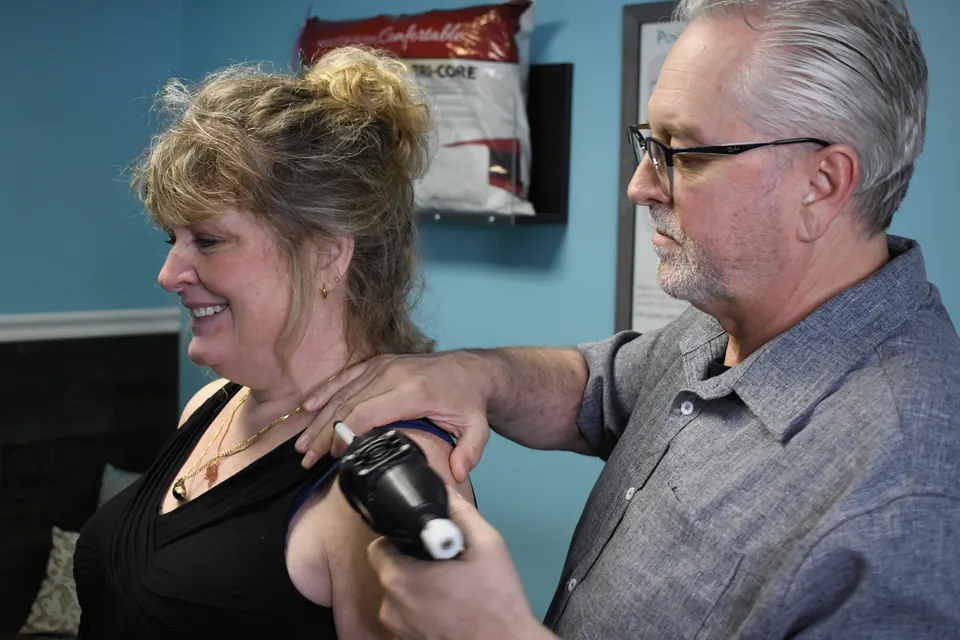
Using Koren Specific Technique (KST) and Talsky Tonal Chiropractic (TTC), our doctors provide gentle, nervous system-focused care, no cracking or twisting, aimed at supporting the shift back toward the parasympathetic, rest-and-repair side of the nervous system. As that shift happens, the body has more room to return its resources to immune surveillance, defense, and the recovery work where getting well actually occurs. We are not fighting the virus directly. We are supporting the system that decides how well you fight it yourself.
What Patients Often Notice
We never promise a specific result, since every immune system and every history is different. That said, many patients tell us they catch fewer colds over a season, moving through what is going around without picking up every bug in the room. When a cold does land, it often moves through more quickly and lingers less. Some notice longer healthy stretches between illnesses, and energy that used to disappear into a low-grade cold seems to stay available for the rest of life. This tends to be care for the whole family: kids in daycare and school meet new viruses constantly, and worn-down adults are often running on a depleted tank right alongside them.
Supporting Resilience at Home
A few habits tend to reinforce what care is working toward:
- Protect sleep as consistently as you can, since it is one of the biggest levers for shifting out of a stress state.
- Notice whether illness tends to follow a stressful stretch, and treat that pattern as useful information, not bad luck.
- Build short breaks into a demanding week rather than saving all your rest for the weekend.
- Keep the basics going: hydration, regular meals, and time outside, since they support the same regulatory system care is working with.
- Track how often illness hits and how long it lasts over a season, so you have something concrete to compare against later.
Next Steps
If this sounds like your family's cold season, our immune resilience page goes deeper into how our doctors evaluate and work with the nervous system behind it. You can also grab our free guide on the nervous system and immune resilience before your first visit. When you are ready, you can book online or call our Royal Oak office at (248) 616-0900. Catching everything that goes around usually has a layer worth looking at, one that has less to do with luck than most people assume.

