
You still get out for the walk most mornings. But somewhere in the last few years you started taking it slower, watching the sidewalk more carefully, maybe skipping it on icy days you would have shrugged off at fifty. There's a grab bar in the shower now. You hold the railing on the stairs every time, without really deciding to.
None of that means anything is wrong with you. It means you've been paying attention. But if you've quietly started narrowing your world, a shorter walk here, skipped stairs there, in the name of staying safe, you already know something has shifted. What's worth asking is whether it has to keep going in that direction.
Our doctors hear a version of this story often, from patients in their sixties, seventies, and eighties. Balance feels less certain than it used to. Joints that loosened up after a few minutes of moving now take longer, or never fully loosen at all. And most of these patients have been told, one way or another, that this is simply what getting older looks like.
What Just Getting Older Usually Involves
Osteoarthritis pain and stiffness can shrink how much you want to do in a day, and the first few steps out of a chair are often the hardest part of getting moving. Range of motion narrows gradually, until checking a blind spot or reaching for a top shelf takes real effort. Sleep interrupted by aches more nights than not leaves less energy the next day than the day before, and a lot of our senior patients mention their thinking feels a little less sharp than it used to.
Balance is usually the one that worries people most, and for good reason. The CDC lists falls as the leading cause of injury for adults 65 and older. The point isn't to alarm you. It's that balance is worth taking seriously well before a fall happens.
Why Your Spine Has More to Do With Balance Than You'd Guess
Your spine is packed with sensors called proprioceptors, sometimes described as an internal GPS. They report your body's position in space to your brain constantly, so it can make the thousand tiny corrections that keep you upright when you step off a curb or catch your toe on a rug. When tension has been building in the spine and nervous system for decades, from old injuries, repetitive strain, or years of everyday wear, that signal gets noisier. The brain receives less accurate information, and reaction time slows.
Think of your nervous system as running on two settings: one that ramps you up to respond to stress, and one that lets your body settle, recover, and repair. As we age, that second setting tends to lose some of its strength, which is part of why stiffness, slower balance, and less restful sleep often show up together rather than one at a time. Aging is real, but the gap between where you are and where you could be is often the nervous system, not the calendar.
Why Stretching and Balance Exercises Only Go So Far
A lot of our senior patients have already done the physical therapy exercises, added the balance training, tried the heating pads and the anti-inflammatories. Some of it helps for a while. Then the stiffness creeps back, or the same caution returns the next time you're on uneven ground. That isn't a failure on your part. Those approaches work on the muscles and joints directly, which is useful, but they don't address the nervous system signal underneath the pattern. When that signal stays noisy, the body keeps compensating the same way, no matter how many exercises you add.
What Care Looks Like for Seniors at Van Every
We start by listening: your health history, your concerns, and what matters most to you, whether that's staying independent, driving comfortably, or simply moving without pain. From there, a gentle INSiGHT scan reads thermal patterns, heart rate variability, and muscle tension along your spine, and gives us a report of findings behind how your nervous system is actually functioning, not just where you feel pain.
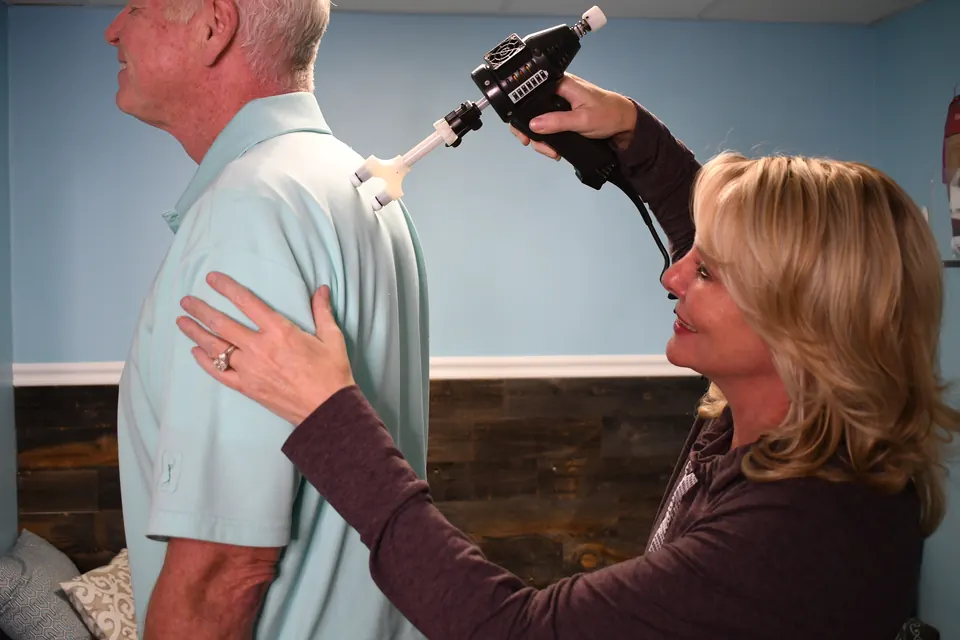
Using Koren Specific Technique (KST) and Talsky Tonal Chiropractic (TTC), our doctors make gentle, nervous system focused corrections, no cracking, twisting, or forceful manipulation, in whatever position is most comfortable for you that day: seated, standing, or lying down. Care is safe alongside osteoporosis, arthritis, and joint replacements, and we work around any mobility limitations rather than asking you to work around us.
What Patients Often Notice
Many seniors tell us they feel steadier on their feet and more confident navigating stairs or uneven ground. Arthritis pain and stiffness tend to ease, and daily tasks like getting up from a chair or turning to check a blind spot often get a little easier. Sleep frequently improves too, and some patients notice they're reaching for pain medication less often than before. Perhaps most importantly, people tend to find their way back to the activities they'd started pulling back from: gardening, driving, keeping up with grandchildren.
A Few Habits That Support the Work Between Visits
- Keep walkways and stairs clear and well lit, especially the paths you use most in the evening
- Wear supportive, well fitted shoes rather than slippers or socks around the house
- Take a short walk most days, even a slow one, to keep your balance system engaged
- Notice and mention any near misses or stumbles at your next visit, they're useful information
- Keep a consistent sleep and wake time where you can, since rest supports the nervous system's ability to recover
Next Steps
If aging has started to feel like a trade off between staying active and staying comfortable, it's worth finding out what's actually going on. You can learn more about our approach on our senior care page, or get our free guide to gentle chiropractic care for older adults for a deeper look at what to expect. When you're ready, you can book online with our doctors, or call us at (248) 616-0900 and we'll help you figure out the right next step.
