Your pediatrician finally said the word out loud, or maybe you said it first. Either way, you left that appointment with a referral slip and very little explanation of what actually happens next. Getting an autism evaluation can feel like stepping into a process nobody walks you through in advance. Here is what that path typically looks like, from the early signs that prompt a referral through what an evaluation actually involves.
The Early Signs That Usually Prompt a Referral
Most evaluations start because a parent or a pediatrician notices a cluster of signs rather than one single behavior. Commonly noticed patterns include a delay in speech and language, not responding consistently to their name, limited back and forth babbling or gesturing, difficulty with eye contact and social back and forth, intense or narrow interests, repetitive movements like hand flapping or rocking, unusual reactions to sounds, textures, or other sensory input, real difficulty with transitions or changes in routine, and limited imaginative or pretend play. Any single item on that list can appear in a child without autism. It is the pattern across several areas, showing up together and lasting over time, that typically prompts a referral for a full evaluation.
Who Actually Does the Evaluation
A formal autism evaluation is usually handled by a developmental pediatrician, a child psychologist or psychiatrist, a neuropsychologist, or a multidisciplinary team that includes several of these specialists together. Your pediatrician's referral is the typical entry point, though waitlists for these evaluations can run long in a lot of areas, so it is worth getting on a list even while you are gathering other information about your child in the meantime. Some families pursue more than one avenue at once, adding a private neuropsychologist to a shorter waitlist for evaluation, or starting with a school district evaluation while a medical one is pending, simply to avoid losing months to a single queue.
What Actually Happens During an Evaluation
An evaluation typically opens with a detailed clinical interview covering your child's developmental history: pregnancy and birth details, early motor milestones, speech and language progress, social skills and eye contact, routines and interests, and any sensory sensitivities you have noticed. From there, the specialist will observe your child directly, often through structured play, watching how they interact, communicate, and respond to changes in the moment. Many evaluations use standardized observation and interview tools to compare what is seen against established diagnostic criteria, which helps keep the process consistent from one evaluator to the next.
Because the evaluation environment itself matters, a large hospital or unfamiliar medical office can genuinely affect how a child presents, sometimes making a child appear more anxious or withdrawn than they are in a familiar setting. If your evaluator offers any flexibility on location or format, it is worth asking about, since a child who is more at ease tends to give evaluators a clearer picture of their actual day to day functioning. It can also help to bring your own notes into the appointment, video clips of behaviors that are hard to reproduce on demand, a running list of foods your child will and will not eat, or a record of how sleep has looked over the past few months, since a single observation window rarely captures everything an evaluator would benefit from knowing.
After the Evaluation
A formal diagnosis, when a family chooses to pursue one, can open the door to school services, therapy referrals, and other structured supports that often require documentation to access. It also gives a name to a pattern many parents have already been noticing for a long time, which can be a real relief even when the underlying challenges have not changed. What a diagnosis on its own does not do is explain what is driving the pattern in your particular child, which is a separate question worth asking alongside it.
It also helps to know that a diagnosis is not a single verdict handed down once and never revisited. Many families end up seeking a second evaluation, updating documentation as a child grows, or discovering that the picture looks different at five years old than it did at fifteen months. Treat the first diagnosis as one solid data point in an ongoing picture, not the final word on your child.
Where Nervous System Care Fits Alongside a Diagnosis
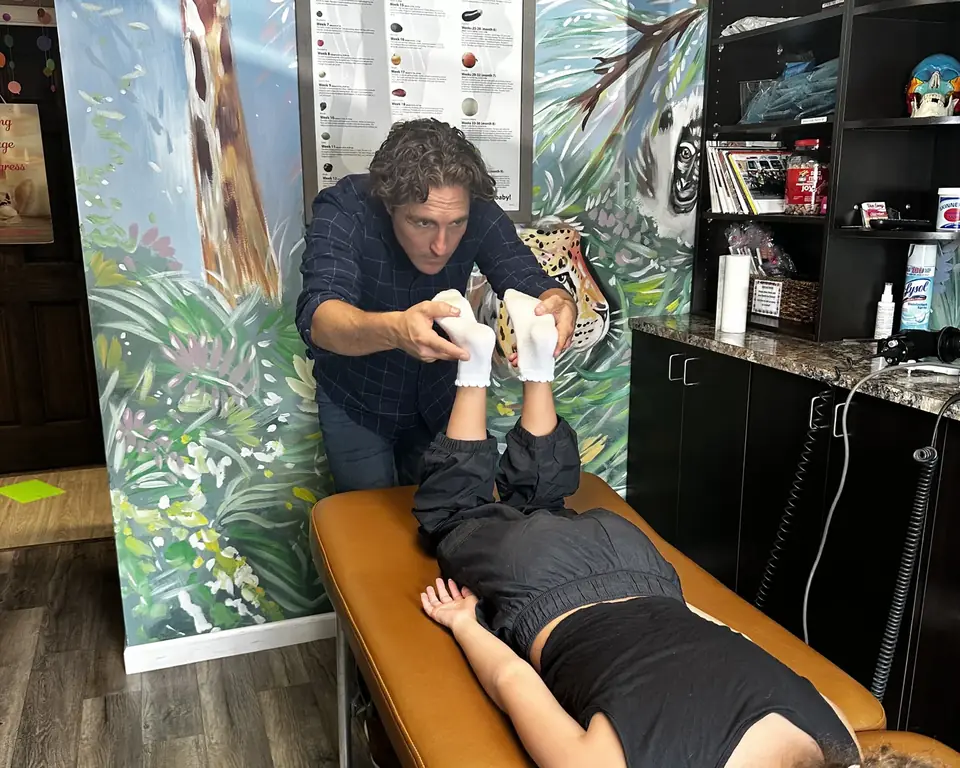
Whether or not your family is pursuing a formal diagnosis, or is already partway through the process, it is worth having your child's nervous system function looked at directly. We start with a detailed case history, including pregnancy, birth, and how your child's patterns have developed and changed over time, questions that do not always come up in a standard evaluation. From there, INSiGHT neurological scanning, thermal, heart rate variability, and surface EMG, gives us an objective look at how your child's nervous system is regulating. Using Koren Specific Technique and Talsky Tonal Chiropractic, light, nervous system focused adjustments, our doctors work to ease tension patterns, particularly around the upper neck and brainstem, that may be contributing to the sensory, social, and communication challenges a formal evaluation is designed to identify.
Questions Worth Bringing to Your First Appointment
- What does your child's pregnancy, birth, and early infancy history look like in detail
- Has your child had frequent illnesses, ear infections, or repeated rounds of antibiotics
- Which sensory sensitivities show up most consistently, and in which environments
- What has already been tried, and what changed or did not change as a result
Where to Go From Here
Whether you are just starting to notice signs, waiting on a referral, or partway through a formal evaluation, our doctors in Royal Oak would be glad to take a look at what your child's nervous system is showing us. You can learn more about how we support autism and neurodevelopmental care, and read our free guide on the nervous system side of these patterns. When you are ready, you can book online, or call us at (248) 616-0900.