
Royal Oak parents often ask a chiropractor about childhood constipation when the pattern keeps returning and they want a closer look at nervous-system function. At Van Every Family Chiropractic Center, the visit begins with the child's full history, an age-appropriate examination, and INSiGHT scans when appropriate. The goal is to understand the individual pattern and explain the findings clearly.
When do parents usually start asking questions?
Parents commonly reach out after they have noticed a repeated pattern rather than one unusual day. A child may avoid the bathroom because going has become uncomfortable, have long gaps between bowel movements, or become uneasy around a familiar routine. Families often want to know whether stress, sleep, transitions, movement, and nervous-system regulation belong in the conversation.
You do not need to sort every possible cause before calling. A simple description of what you see is useful. The chiropractic evaluation focuses on the history and function that can be assessed in the office, then gives the parent a clear explanation of what was found.
What should I track before the first visit?
A short record can help the doctor see patterns that are hard to remember during an appointment. Keep it simple enough that you will actually use it. Helpful details include:
- How often your child has a bowel movement
- Whether going looks comfortable, rushed, or avoided
- Changes in sleep, appetite, activity, or routine
- Times when the pattern became easier or harder
- What your family has already tried
- Questions your child wants answered in their own words
The notes are not a test. They give the doctor a more accurate starting point and help you describe the child's daily experience.
What happens during the chiropractic evaluation?
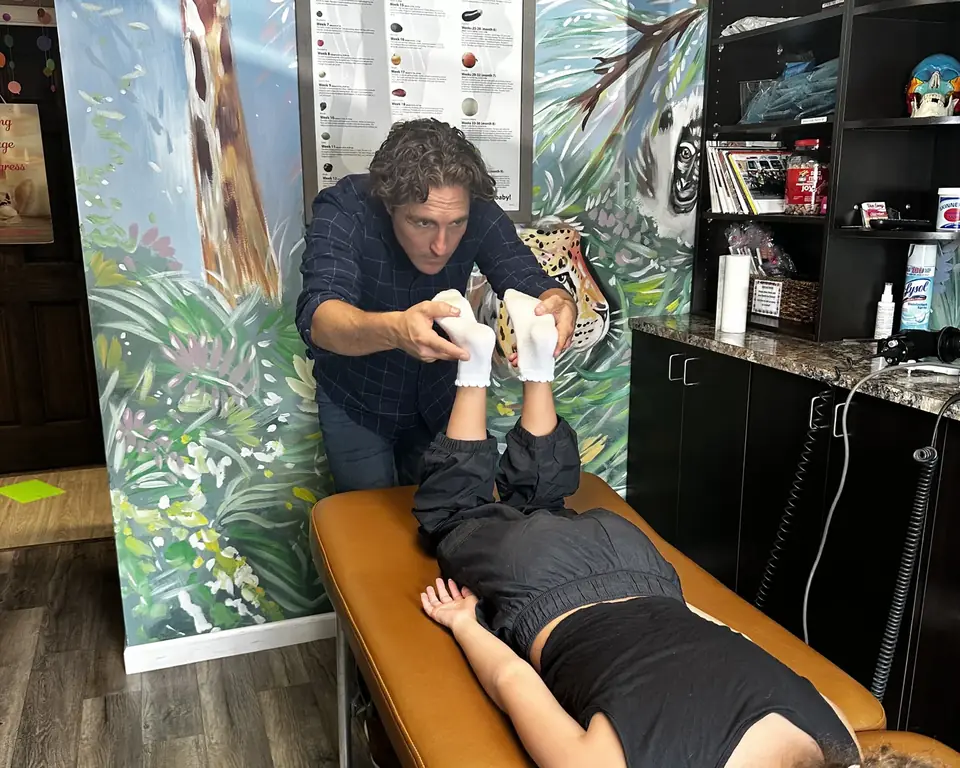
The doctor asks about pregnancy and birth, early feeding and digestion, movement milestones, falls, daily routines, and when the constipation pattern began. An age-appropriate examination may include posture, comfortable movement, and a gentle check of the spine and pelvis. Nothing about the visit requires a child to perform or tolerate a position that feels overwhelming.
INSiGHT scans may add thermal readings, surface electromyography, and heart rate variability. These non-invasive measurements provide objective information about nervous-system function and muscle activity. The doctor considers them together with the history and physical findings.
Why does the nervous system come up in a digestion visit?
The nervous system helps coordinate the automatic processes involved in digestion and elimination. That is why a chiropractic evaluation looks beyond a food list. The doctor is interested in how the child's body is adapting, where tension is present, and whether the examination and scans show a pattern worth addressing.
This visit angle is different from another article about the brain-gut connection or a list of constipation causes. It shows parents exactly what information the doctors gather and how a decision about care is made.
Will care begin on the first day?
No. Van Every uses a two-visit intake. The first visit is for the detailed history, examination, and scans. The doctor reviews the findings before the family returns.
The second visit is the Report of Findings. The doctor explains what the information means, answers questions, and recommends an individualized plan when appropriate. The family can then decide whether to continue, and visit two includes the opportunity for the first adjustment. You can review the process on the new patient center page.
What does gentle care for a child look like?
Our doctors use light, nervous-system focused contacts with no forceful cracking, popping, or twisting. Koren Specific Technique is instrument-assisted and can be used in different comfortable positions. Talsky Tonal Chiropractic is hands-on and evaluates the NeuroSpinal system as a connected whole.
The doctor selects the technique and contact from the child's findings rather than using the same routine for every digestive concern. Parents can ask what is being checked, why a position was chosen, and what will be reassessed over time.
What should I ask before choosing care?
Ask the doctor to connect the recommendation to your child's actual findings. Useful questions include what stood out in the history or scans, what the care plan is intended to support, how progress will be tracked, and when the findings will be rechecked. A useful answer should be specific and understandable.
You can also ask how the office accommodates a child who is nervous, highly active, or sensory-sensitive. The pace, explanation, and position can be adapted without turning the appointment into a struggle.
How can parents prepare a child for the visit?
Describe the appointment in plain language. Tell your child that the doctor will listen, watch how their body moves, and use gentle scans. Keep the conversation neutral so the child does not feel responsible for producing a particular result. The visit is a chance to gather information together.
Bring a familiar item if your child finds new settings difficult. Clothing that allows easy movement can make the examination simpler. Tell the team about sensory or communication preferences before the exam begins, including whether your child wants to see an instrument or hear each step first.
What can we track after the evaluation?
Continue the same simple notes you brought to the first visit. Tracking frequency, comfort, withholding behavior, sleep, and routine gives parents and the doctor a consistent picture over time. The doctor can compare those observations with later examination and scan findings instead of judging progress from one isolated day.
Where can I learn more about the pattern?
The constipation in children page explains the office's broader nervous-system approach. The pediatric chiropractic page describes how care changes with a child's age, size, and comfort. Reading both can help you make a focused question list before the appointment.
If you are ready to discuss your child's constipation pattern with our doctors in Royal Oak, book online. You can also call or text us at (248) 616-0900 to ask what the first visit includes.


